Work with us
We are a small expert team experienced in software development, user interface design, product leadership, R&D, partnerships, and prototyping projects.
How we can help you:
- User Interface design
- Co-design workshops
- Product design
- Data visualisation
- Research & Writing
- Physical outputs, hardware, even
Past work
Spelunkers
Spelunking is an American word for cave-diving. We’ve co-opted it to describe the kinds of collection interfaces we like to build. They don’t say ‘look at the things we think are most important’ but instead say ‘follow your own path’. We build those tools: it’s part data archaeology, part visualisation, and built for enjoyment and curiosity rather than search or compliance.
We’ve created loads of these collection explorers, given talks about them, and even written an academic paper. Here are some of our favourite examples (created in previous roles).
The Wayback Machine
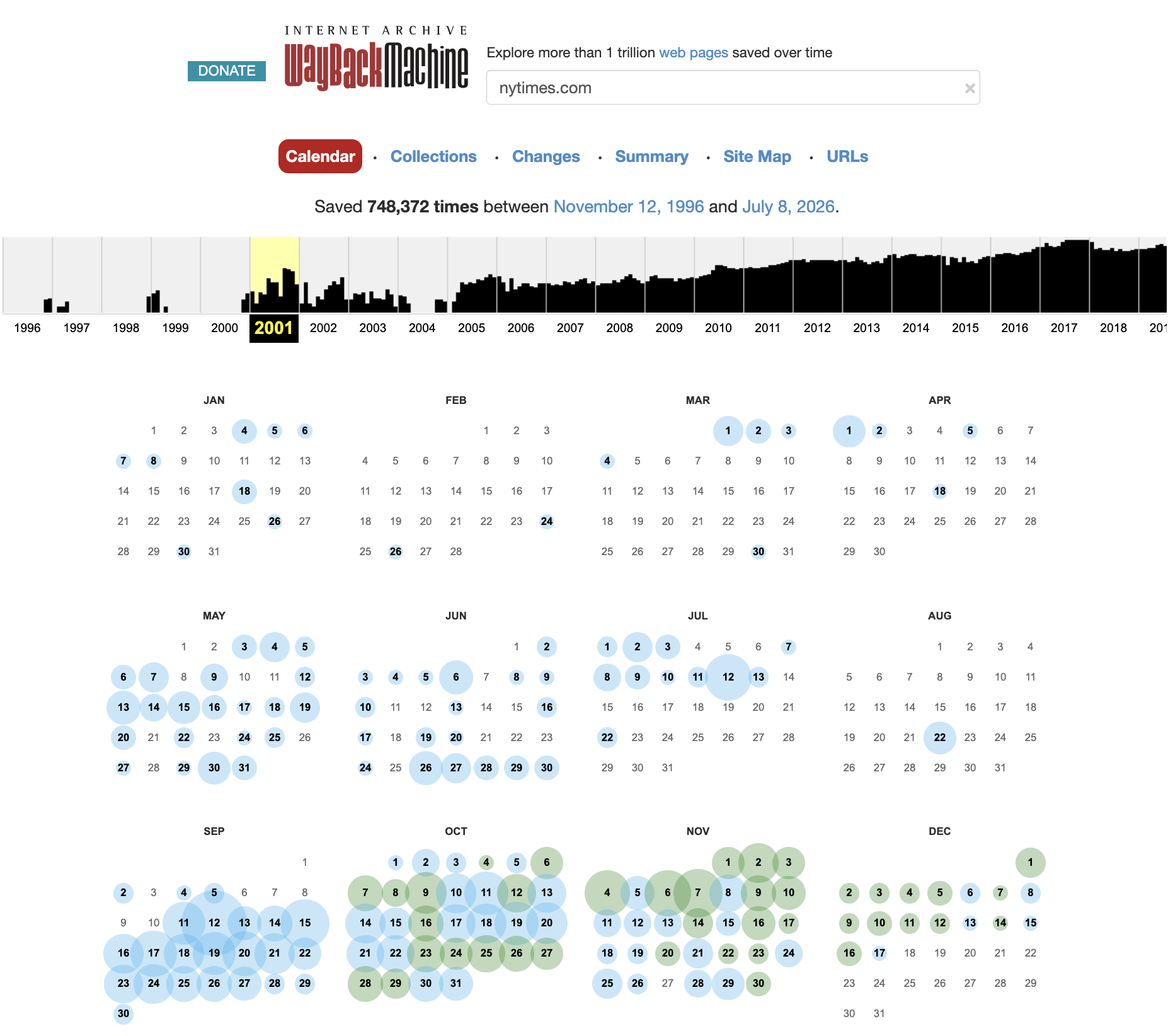
When George was working at the Internet Archive, she designed the user interface of the wonderful Wayback Machine. Alongside the calendar view to show you how often sites are crawled, she also designed the little toolbar that sits atop any Wayback Machine page view. (That’s now stretched way past the original 2010 layout!)
Waddesdon Bequest, British Museum
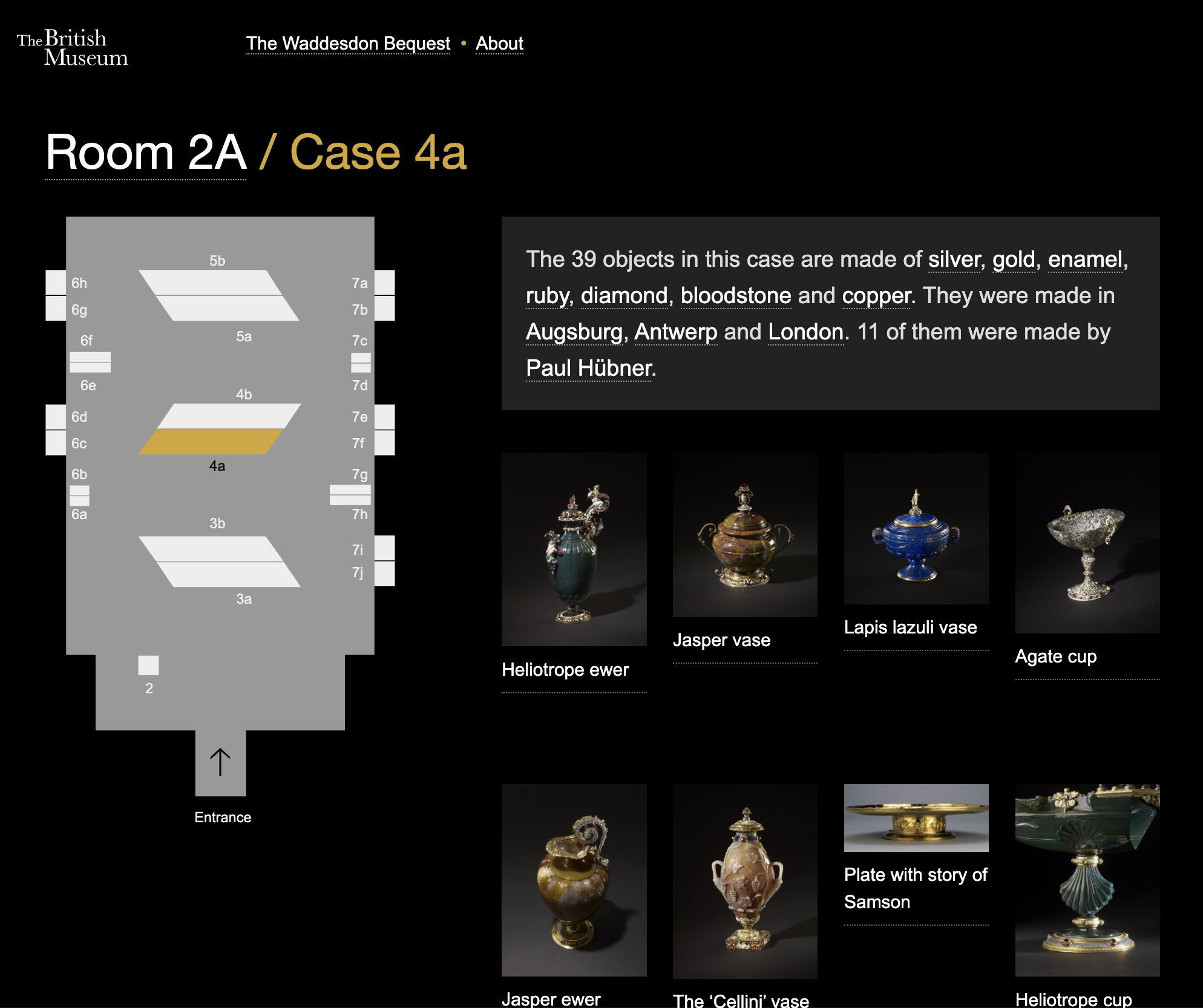
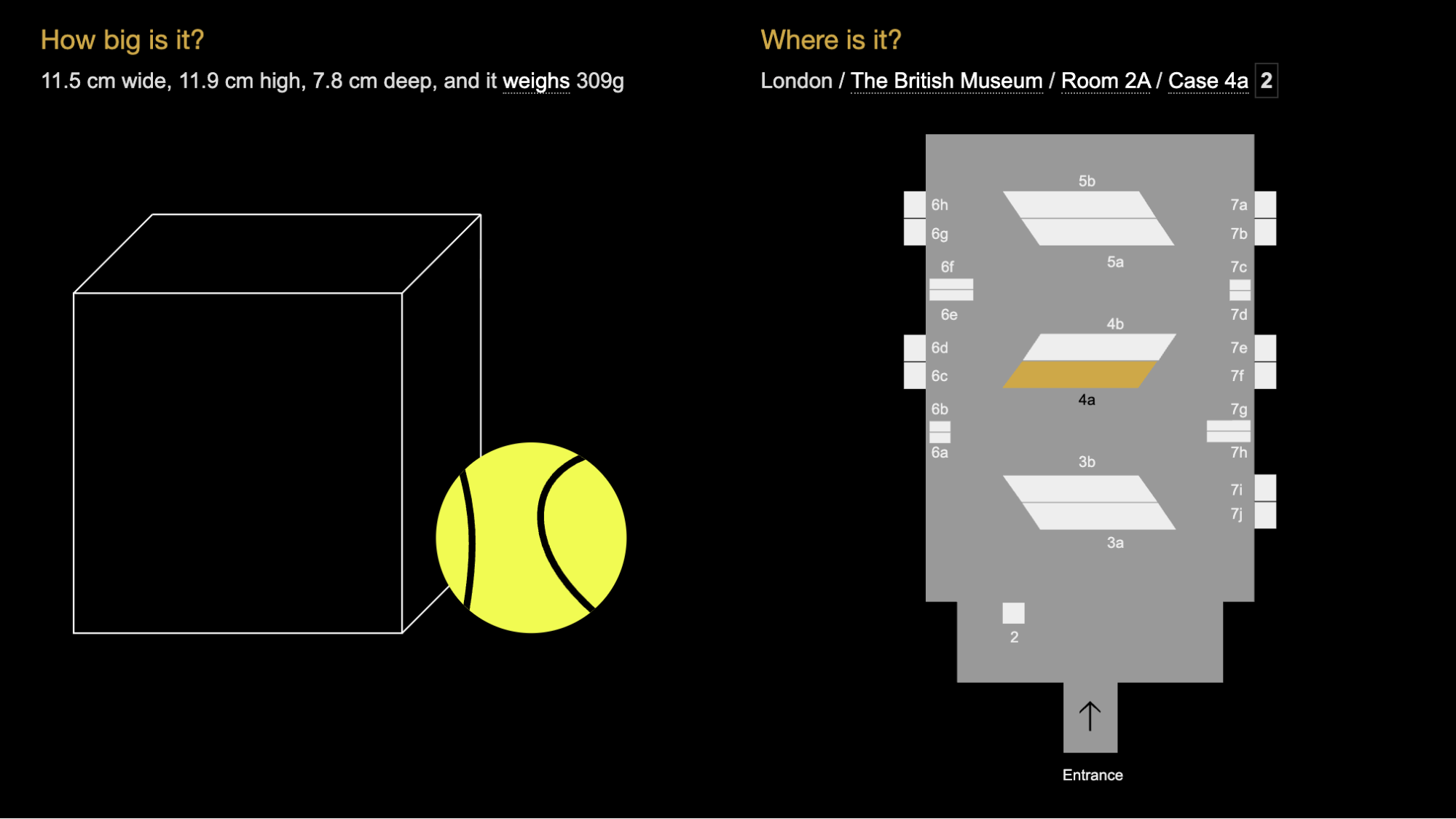
The Waddesdon Bequest spelunker was a commissioned project initially intended to be an in-gallery experience. After a day of sitting in the small-but-very-fancy gallery at the British Museum, George had the idea to bring the gallery to the web instead. The spelunker is shaped by the room. You can explore each case in great detail, and we also invented the idea of a scale object (a tennis ball), so viewers could easily tell how big things were.
What’s in The Library? for Wellcome Library
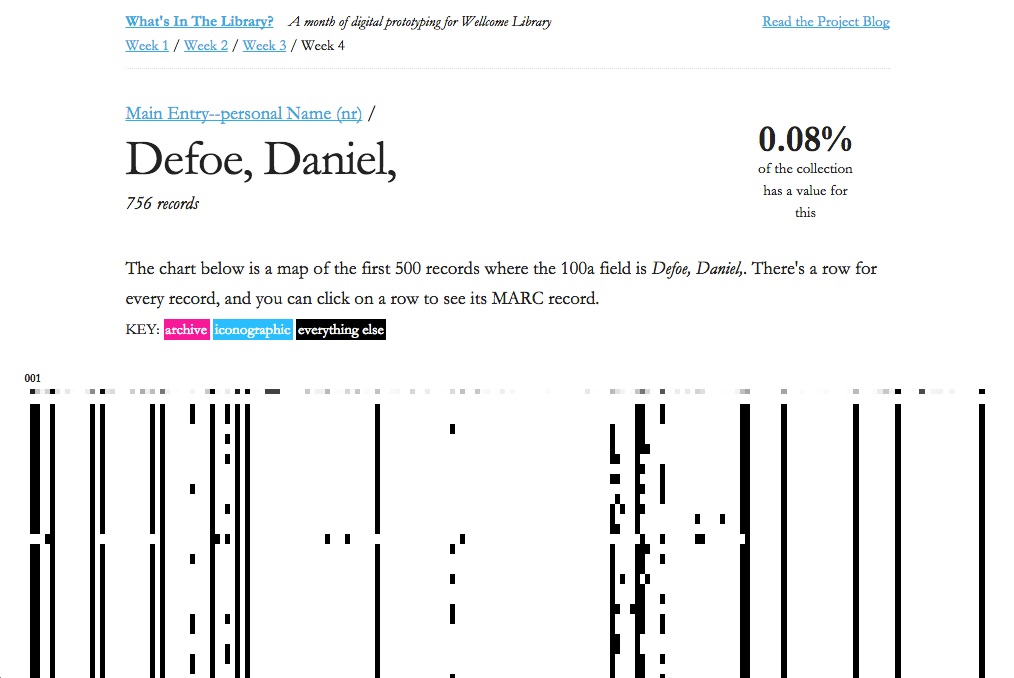
We spent a month installed inside the Wellcome Library and it was a delight. Our task was to prototype and explore the collection metadata, and we settled on four themes, working on one theme per week: 1) Scope/Extent of the Collection, 2) Showing The Thing, not the record, 3) Context, and 4) Scalability. The project blog is still on Wordpress!